Posts

Showing posts with the label #HumanEvolution

Chapter 12: Humanity and the End of Evolution – Eternal Evolution?

Image
Chapter 12: Humanity and the End of Evolution – Eternal Evolution? Evolution is acontinuous process of change in nature. But does evolution have an end? Will the human species continue its evolutionary journey, or will it reach a final stage? Will humanity remain subject to nature’s evolutionary rules, or will it take evolution into its own hands? These questions make the future of human evolution even more intriguing. In the previous chapter, we discussed how technology and biotechnological advancements are shaping humanity. Now, we will explore some crucial questions about the future of human evolution. Can humans accelerate their evolution using genetic engineering, artificial intelligence, and biotechnology? If so, will this process eventually come to an end, or will humanity be in a state of constant change? The answers to these questions will determine the course of humanity’s evolutionary journey. The End of Evolution: Will Humans Reach Their Final Form? Evoluti...
Chapter 11: The Evolution of Humanity and Potential Future Changes

Image
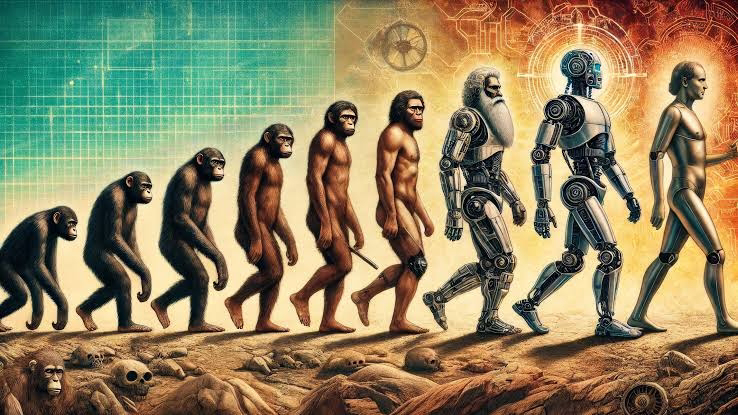
Chapter 11: The Evolution of Humanity and Potential Future Changes Evolution is a continuous process that has been ongoing since its inception. Every living organism on Earth has undergone evolutionary changes over thousands of years. But what about humanity? The human species has undergone a much faster evolutionary journey compared to other organisms. However, beyond traditional evolutionary processes like natural selection, the evolution of humanity has taken on a completely new dimension thanks to modern science and technology. Today, with advancements in genetic engineering, artificial intelligence, and biotechnology, the pace of evolutionary processes is accelerating. Humanity is pushing the boundaries of biology and taking steps to control its own evolution. In this chapter, we will explore a few different scenarios regarding how the evolutionary journey of humankind may unfold in the future and discuss potential developments that could give a new direction to humanity’s evol...

Chapter 8: Genetics and Evolution – The Role of Genetic Changes in Evolution

Image
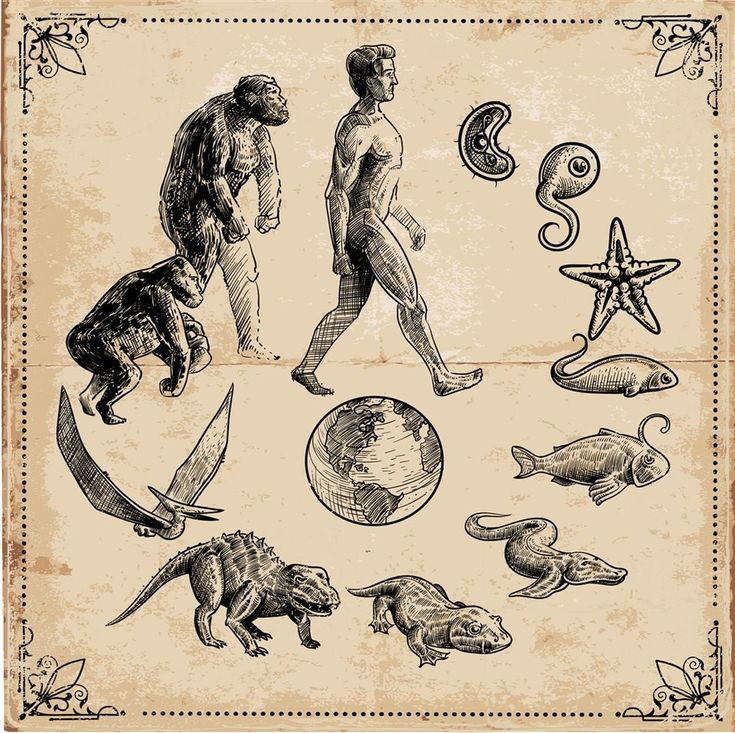
Chapter 8: Genetics and Evolution – The Role of Genetic Changes in Evolution The theory of evolution does not solely rely on external factors such as fossil records, morphological similarities, and natural selection. It is also closely linked to changes in the genetic structures of living organisms. Genetics forms the cornerstone of evolutionary changes, and even before Darwin's theory of natural selection, the foundations of genetic science were laid in the late 19th century. However, to understand how genetic science integrates with the theory of evolution, it is essential to know how these two fields complement each other. Genetics: The Cornerstone of Evolutionary Changes Genetics is the branch of science that studies the hereditary units carrying biological traits in living organisms. An organism's genetic structure determines its traits. Genetic material is encoded in DNA and RNA molecules, and this genetic information is passed on from generation to gene...

The Future of Human Evolution: What Will We Look Like in 1000 Years?

Image
The Future of Human Evolution: What Will We Look Like in 1000 Years? Today, as technology and biology evolve rapidly, it is only natural to wonder where this change will lead. If we could journey 1000 years into the future, what would humanity look like? Perhaps we would encounter a completely different human species with entirely new physical traits. Technological advancements, environmental changes, genetic engineering, and artificial intelligence—all of these could shape the future of human evolution. Let’s explore how humanity might evolve in 1000 years. Which of our traits will disappear, and which will become more prominent? Join us on this exciting journey! 1. What is Evolution and How Has Humanity Evolved? Human evolution is a process that has taken millions of years. Early humans began to separate from our common ancestors with chimpanzees around 7 million years ago. Over time, our brain capacity increased, we developed the ability to walk upright, and we learned t...